


August 2026
Recurring costs
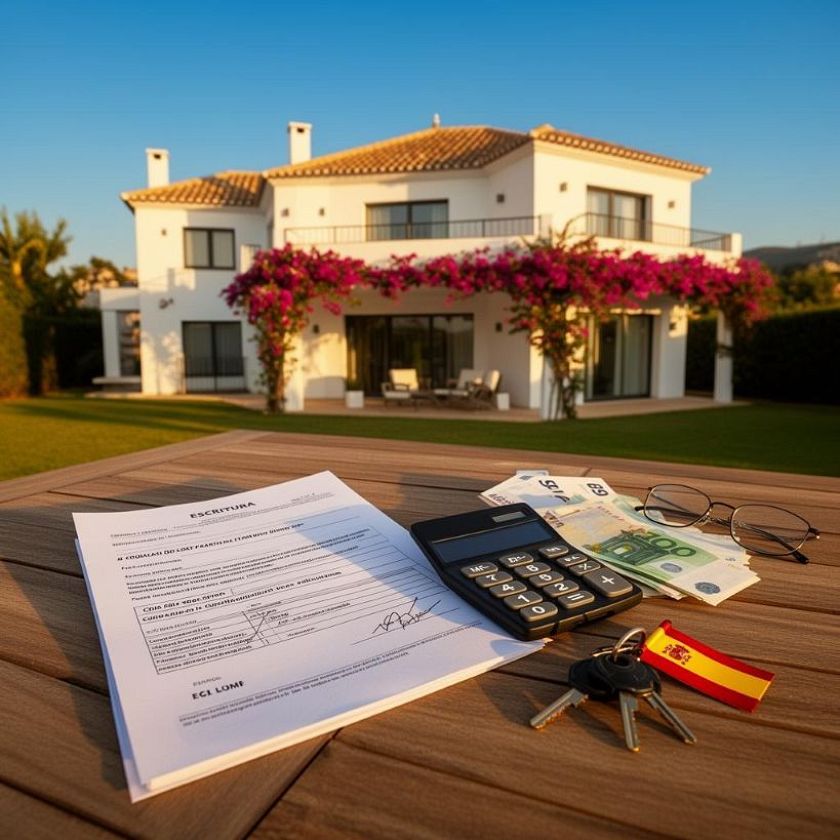
Masterclass – What recurring costs do you have as the owner of a property in Spain?
In our previous masterclasses, you could already read about the costs you need to take into account when purchasing a property in Spain. However, even after the purchase has been completed, owning a property naturally entails a number of annual or regularly recurring costs.
Just as in your home country, as an owner you will have to deal with taxes, insurance, utilities and, where applicable, community fees. The exact costs that apply and their amount depend, among other things, on the property, its location and your personal situation.
To give you a clear overview, Tanto Más lists the most important recurring costs for you in this masterclass.
This allows you to know in advance what to include in your annual budget and helps you avoid unexpected costs as an owner.
1. IBI – Property tax
IBI (Impuesto sobre Bienes Inmuebles) is the annual municipal property tax in Spain.
The amount depends, among other things, on the location and the cadastral value of your property and plot.
If you buy an off-plan new-build property, the exact amount will not yet be known, but the developer and the law firm can usually provide a reliable estimate. For an existing property, the annual IBI amount is already known.
IBI is paid annually. The payment period and the date on which a direct-debit payment is collected from your account are determined locally and may therefore vary from one municipality to another.
Illustrative example: Property in Pilar de la Horadada
Built area: 120 m²
Plot: 300 m²
Cadastral value (valor catastral): €100,000
€100,000 × *0.617% = €617 in IBI per year
(*For 2026, 0.617% is the rate applicable in Pilar de la Horadada.)
2. Non-resident income tax – IRNR
If you own a property in Spain but are not a Spanish tax resident, you must file an annual non-resident income tax return (IRNR – Impuesto sobre la Renta de No Residentes).
Even if you use the property exclusively yourself and do not rent it out, the Spanish tax authorities assume a limited imputed rental income for the property. The tax due is calculated on this basis.
For residents of the European Union, the current tax rate is 19%. This percentage is not applied to the purchase price of the property, but to imputed income determined on the basis of the property's cadastral value (valor catastral).
If a property is owned by several people, the tax is apportioned according to each person's ownership share. For example, if you buy the property with your partner and each of you owns 50%, each owner must file a separate return and pay tax on their respective share.
The return is filed using Modelo 210 and is submitted annually to the Spanish tax authorities. Your law firm can assist you with this tax return.
Illustrative example: Property in Pilar de la Horadada purchased by two owners (50/50)
Built area: 120 m²
Plot: 300 m²
Cadastral value (valor catastral): €100,000
1.1% of the cadastral value is treated as imputed income:
€100,000 × 1.1% = €1,100 in imputed income
A tax rate of 19% is applied to this amount for EU residents:
€1,100 × 19% = €209 in IRNR per year, or €104.50 per person per year
3. Community fees – Comunidad
If you buy a property that forms part of a community of owners (Comunidad de Propietarios), you will pay periodic community fees.
These contributions cover the management and maintenance of communal areas such as gardens, swimming pools, lifts, lighting and cleaning. The amount varies from one residential complex to another and depends, among other things, on the facilities available and the participation quota (cuota de participación) assigned to your property.
For an existing property, these costs are already known. For a new-build property, the developer can usually provide a reliable estimate.
In addition, the community may exceptionally request a special assessment (derrama) for major unforeseen works or investments.
4. Municipal waste collection tax – Basura
As the owner of a property in Spain, you will generally also pay a municipal waste collection tax (tasa de basura) for the collection and processing of household waste.
The amount and method of collection vary by municipality and may depend, among other things, on the type of property. The tax is generally collected annually or in several instalments by direct debit from your bank account.
For an existing property, the amount is already known. For a new-build property, an estimate can usually be made in advance.
Please note: Does your property not form part of a community of owners, for example because it is a detached villa? In that case, you will of course not pay community fees. However, you should take into account any individual costs for maintaining your swimming pool and/or garden. These costs depend on the size and the level of maintenance required.
5. Home insurance
Just as in your home country, it is advisable to insure your Spanish property properly. Home insurance (seguro de hogar) may provide cover against fire, water and storm damage, theft and liability, among other risks.
The annual premium depends on the type and value of the property and the cover selected. For a property within a community of owners, certain communal areas are generally insured collectively, but it is still advisable to take out your own insurance for your property and its contents.
6. Boiler and air-conditioning maintenance
To keep your installations in good condition, regular maintenance of the boiler and air-conditioning system is recommended. An annual inspection and cleaning help the appliances operate efficiently, extend their service life and may prevent breakdowns.
The costs depend on the type of installation and the maintenance contract selected.
7. Water, electricity and internet
You should, of course, also take into account the usual costs for water, electricity and internet. The cost depends on your consumption and the plan or supplier selected.
Electricity and internet are generally paid monthly by direct debit. Water bills are usually collected quarterly
